

I. Working Principle of Eddy Current Displacement Sensors
The eddy current effect refers to the physical phenomenon in which eddy currents are induced on the surface of a metal conductor in an alternating magnetic field, thereby causing changes in coil impedance. By detecting the amount of impedance change, the sensor converts mechanical displacement into an electrical signal, with measurement accuracy reaching the micron level. Compared with laser or grating sensors, its advantages lie in:
Resistance to electromagnetic interference: Suitable for the high-power electrical environment of machine tools;
High temperature and high pressure resistance: Can operate stably under harsh working conditions such as lubricating grease and cutting fluid;
Long-life design: No physical wear, suitable for high-frequency dynamic monitoring.
The D8011 displacement measurement system from Shenzhen Senther Technology (including a signal conditioner) can directly output a voltage signal proportional to the distance between the probe and the surface of the conductive target.
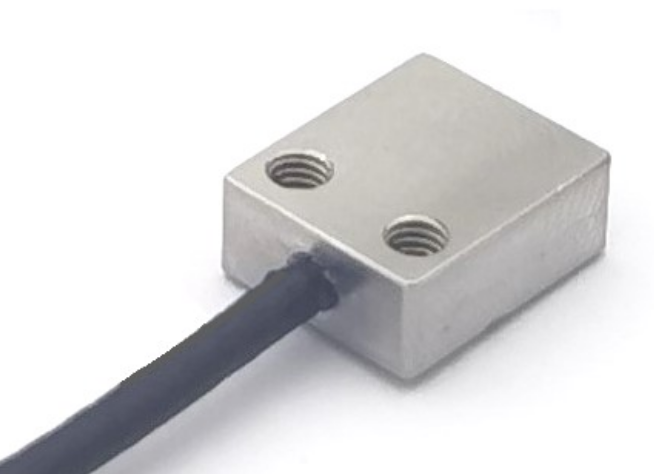
This sensing solution can simultaneously measure static (position) and dynamic (vibration) displacement values. The device is particularly suitable for vibration and position measurement of microstructures, as well as phase reference and velocity measurement. This eddy current displacement sensor system provides state-of-the-art performance, including excellent linear range, accuracy, and temperature stability. All D8011 sensor parameters offer good consistency. The probe and preamplifier can be flexibly assembled and disassembled. The probe has a flat structure with mounting screw holes and can be installed without special tools. The D8011 displacement sensor offers long-term reliability, high sensitivity, strong anti-interference capability, non-contact measurement, fast response speed, and immunity to media such as oil and water. It is often used for long-term real-time monitoring of parameters such as shaft displacement, shaft vibration, and shaft speed of micro rotating machinery, thereby analyzing the operating condition and causes of equipment faults and effectively protecting equipment and enabling predictive maintenance.
II. Analysis of Typical Application Cases
Case 1: Closed-loop position control of CNC machine tool worktables
Pain point: Traditional hydraulic guideways suffer from positioning deviation due to wear, affecting machining accuracy.
Solution: Install eddy current sensors on the X/Y/Z axis guideways to provide real-time feedback on slider position.
Result: After application by an automotive parts processing enterprise, positioning error was reduced from ±5 μm to ±1.5 μm, and tool life was extended by 20%.
Case 2: Online monitoring of grinding wheel wear on grinding machines
Pain point: Wheel dulling causes fluctuations in workpiece surface roughness, requiring frequent manual replacement.
Innovation: Embed sensors into the axial displacement detection module of the grinding wheel spindle, and trigger an alarm when the wear amount exceeds a threshold (e.g., 0.02 mm).
Data comparison: A bearing manufacturer achieved predictive maintenance, reducing equipment downtime by 45%.
Case 3: Adaptive adjustment of die clearance on stamping machines
Technical breakthrough: Arrange array sensors between the hydraulic press slider and the die to monitor clearance changes in real time (resolution 0.005 mm).
Process improvement: A home appliance sheet metal parts production line dynamically compensated for clearance, increasing the product qualification rate from 92% to 99.3%.
Case 4: Vibration suppression system for high-speed spindles
Engineering practice: Install differential eddy current probes at the spindle end of a machining center to detect vibration amplitude in the 0.1–50 kHz frequency band.
Economic benefits: Data from an aerospace manufacturing enterprise showed that the tool chipping rate decreased by 60% and machining efficiency increased by 15%.
III. Technology Extensions and Industry Trends
Eddy current sensors are currently being upgraded in two directions:
Intelligent integration: Combined with the industrial Internet of Things to enable edge-side data preprocessing (such as wavelet denoising algorithms);
Multi-parameter fusion: Synchronous measurement of parameters such as temperature and hardness to build machine tool health assessment models.
According to market forecasts, the global machine tool sensor market will exceed USD 900 million by 2025, of which eddy current technology will account for more than 35%.
From precision displacement detection to predictive maintenance, eddy current displacement sensors are reshaping the intelligent core of machine tools. Their measurement and control capability, "invisible" within mechanical structures, not only ensures nanoscale machining accuracy but also provides a key data fulcrum for the intelligent transformation of manufacturing. With breakthroughs in new materials and AI algorithms, this technology will continue to unlock the potential of precision manufacturing.
