

I. Industry Background
The digital economy and the explosion of AI computing power are driving data centers rapidly toward high density and high computing power. Power per rack has surged from below 8 kW in traditional facilities to 40–100 kW, with some AI cluster racks exceeding 130 kW. Limited by heat dissipation efficiency, traditional air-cooling systems can no longer meet the cooling demands of high-density computing, and liquid cooling technologies (cold plate and immersion) have become mainstream solutions.
As the "lifeline" of data centers, cooling systems account for 40%–50% of total data center energy consumption. Power issues cause 43% of unplanned data center outages, and cooling system failure is the second-largest cause. A single outage at a Tier III data center costs about USD 9,000 per minute. At the same time, national policies mandate that large data centers reduce PUE to below 1.25, with hub-node data centers required to stay at or below 1.2, forcing cooling systems to transition toward efficient, intelligent, and predictive operations and maintenance (O&M).
Most data center cooling systems today suffer from fragmented monitoring, isolated data silos, and reactive fault response. Key equipment such as pumps, fans, heat exchangers, CDUs (coolant distribution units), and cooling towers lacks full-dimensional status sensing and relies on manual inspection, making it impossible to provide early warning of hidden risks such as excessive vibration, abnormal temperature, pressure fluctuation, and leakage. Such risks can easily lead to major incidents including cooling interruption, equipment burnout, and computing paralysis. Against this backdrop, full-status monitoring of cooling system equipment based on professional sensors has become a core necessity for safe, efficient, and low-carbon data center operation.
II. Necessity of Monitoring
(1) Avoid Major Outage Risks and Ensure Computing Continuity
Abnormal vibration, temperature, pressure, and speed of core cooling equipment (pumps, fans, CDUs, heat exchangers) are precursors to bearing wear, impeller imbalance, pipeline blockage, seal leakage, and other faults. Traditional manual inspection has long cycles and low precision, making it difficult to capture early hidden risks in time. Sensor-based monitoring from SENSOR Technology enables 24/7 real-time monitoring and provides 7–30 days of early warning, preventing minor faults from escalating into catastrophic incidents such as cooling interruption and computing paralysis, and reducing unplanned outage risk by more than 80%.
(2) Support Predictive Maintenance and Reduce O&M Costs
The traditional "repair after failure" model involves high repair costs, serious spare-parts waste, and large outage losses. Predictive maintenance based on sensor data accurately locates faulty components and root causes, enabling "maintenance on demand," reducing unnecessary O&M man-hours by more than 50% and spare-parts inventory costs by 30%. In addition, trend analysis of monitoring data helps optimize equipment operating parameters and extend equipment service life by 20%–30%.
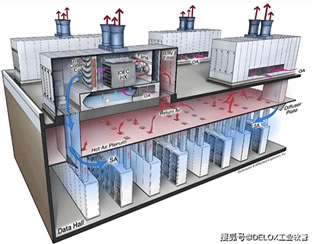
(Image from the internet; please notify us for removal if it infringes any rights.)
(3) Optimize Cooling Energy Efficiency and Help Achieve PUE Targets
Cooling systems account for a high share of energy consumption. Real-time temperature, pressure, flow, and vibration data collected by sensors can be linked with BMS/DCIM systems to dynamically adjust pump speed, fan frequency, and coolant flow, avoiding "over-cooling" or "under-cooling," reducing cooling energy consumption by 15%–25%, and helping keep data center PUE reliably within 1.25.
(4) Meet Compliance and Safety Management Requirements
Data center O&M must comply with policies such as the Code for Design of Data Centers and the Special Action Plan for Green and Low-Carbon Development of Data Centers. Status monitoring data serves as core evidence for compliance audits and safety traceability. In addition, hidden risks in liquid cooling systems such as leakage, high temperature, and high pressure can easily cause equipment short circuits and fires. Sensor monitoring enables real-time warning of hidden risks and strengthens the safety defense line.
III. Core Monitoring Details (Full Equipment, Full-Dimensional Coverage)
(1) Monitoring Objects
Coverage of all key equipment across the cooling system chain: chillers (compressors, evaporators, condensers), circulating water pumps, cooling fans, CDUs (coolant distribution units), plate heat exchangers, cooling towers, coolant pipelines, valves, and expansion tanks.
(2) Monitoring Parameters (Precise Fault Location, No Blind Spots)
1. Vibration Parameters (Core Fault Warning Indicators)
Monitoring locations: pump bearing housings, fan bearing housings, compressor shells, CDU pump bodies, heat exchanger inlet and outlet
Monitoring dimensions: three-axis vibration acceleration, vibration velocity, vibration displacement, vibration frequency
Warning thresholds: vibration velocity > 4.5 mm/s (pumps/fans), vibration acceleration > 8 g (compressors); warning triggered when thresholds are exceeded
Monitoring significance: early warning of mechanical faults such as bearing wear, impeller imbalance, loose base, and rotor eccentricity, preventing equipment burnout
2. Temperature Parameters (Core Indicators of Heat Dissipation Efficiency and Overheating Risk)
Monitoring locations: equipment surfaces (pump/fan/compressor shells), coolant inlet and outlet (CDU/heat exchanger/chiller), rack air inlet/outlet, room cold and hot aisles
Monitoring dimensions: surface temperature, medium temperature, ambient temperature and humidity
Warning thresholds: equipment surface temperature > 70°C, coolant supply temperature > 25°C, return water temperature > 35°C, rack inlet air temperature > 27°C; warning triggered when thresholds are exceeded
Monitoring significance: monitor heat dissipation efficiency, warn of overheating, condensation, and freezing risks, and ensure stable heat dissipation for IT equipment
3. Pressure Parameters (Core Indicators of Pipeline and Medium Safety)
Monitoring locations: coolant pipelines (supply/return), pump inlet and outlet, CDU inlet and outlet, heat exchanger inlet and outlet, expansion tank
Monitoring dimensions: static pressure, differential pressure, pressure fluctuation
Warning thresholds: supply pressure < 0.3 MPa, return pressure > 0.8 MPa, differential pressure < 0.1 MPa; warning for pressure fluctuation of ±0.2 MPa lasting 5 minutes
Monitoring significance: warn of pipeline blockage, leakage, pump idling, and valve failure, and ensure stable coolant circulation — SENSOR Technology
4. Liquid Level/Flow Parameters (Indicators of Medium Sufficiency and Circulation Efficiency)
Monitoring locations: cooling tower basin, expansion tank, CDU reservoir, main supply and return pipelines
Monitoring dimensions: liquid level height, medium flow, flow fluctuation
Warning thresholds: liquid level below the 1/3 warning mark, flow below 80% of rated value
Monitoring significance: prevent dry-burn and cooling interruption caused by insufficient coolant, and ensure circulation flow matches computing heat dissipation demand
5. Speed/Operating Status Parameters (Indicators of Equipment Operating Stability)
Monitoring locations: pump motors, fan motors, compressor motors
Monitoring dimensions: speed, operating hours, start/stop counts, current/voltage
Warning thresholds: speed deviation of ±10% from rated value, current deviation of ±15% from rated current
Monitoring significance: warn of motor overload, no-load operation, and transmission faults, and determine whether equipment operating status is normal
IV. SENSOR Technology Sensor Acquisition Configuration (Precise Model Matching, Industrial-Grade Adaptation)
(1) Sensor Selection Principles
Industrial-grade protection: IP65 or above, corrosion resistance, impact resistance, EMI/RFI shielding, suitable for the harsh cooling system environment of humidity, dust, and strong vibration
High precision and high stability: temperature accuracy ±0.2°C, vibration accuracy ±5%, pressure accuracy ±0.5% FS, stable operation over a wide temperature range (-40°C to 125°C)
Easy installation and integration: stud or adhesive mounting; output signals compatible with RS485/4-20 mA/LoRa; direct connection to BMS/DCIM/cloud platforms
Domestic supply adaptation: independently developed by SENSOR Technology, with stable supply, strong customization capability, and fast after-sales response
(2) Sensor Configuration by Equipment
1. Circulating Water Pump (Core Monitoring: Vibration, Temperature, Pressure, Speed)
Vibration monitoring: 310AT integrated temperature-vibration sensor (single-axis), installed on the front and rear bearing housings of the pump; simultaneously collects vibration acceleration (0.3–15,000 Hz) and temperature (-55°C to 125°C); metal welded seal, 5,000 g impact resistance
Pressure monitoring: P3501-16 pressure sensor, installed at pump inlet and outlet; range 0–1.6 MPa, gauge pressure output, accuracy ±0.1% FS; MEMS silicon piezoresistive technology for long-term stability
Speed monitoring: Hall switch or photoelectric sensor, installed at the motor end to collect speed signals
2. Cooling Fan (Core Monitoring: Vibration, Temperature, Speed)
Vibration monitoring: 334A three-axis vibration sensor, installed on the fan bearing housing; synchronous three-axis measurement, wide frequency response (0.1–10,000 Hz), annular shear mode, accurately capturing imbalance and looseness faults
Temperature monitoring: TH742 infrared temperature sensor, non-contact measurement of fan shell, stator, and rotor temperatures; range -20°C to 100°C, accuracy ±0.2°C, suitable for temperature monitoring of high-speed rotating parts
Speed monitoring: Hall switch or photoelectric sensor, installed at the motor end to collect speed signals
3. Chiller (Compressor/Evaporator/Condenser; Core Monitoring: Vibration, Temperature, Pressure)
Compressor vibration: 312A-80 lightning-protection acceleration sensor, installed on the compressor shell; range 80 g, IEPE output, EMI shielding, resistant to electromagnetic interference, suitable for the strong electromagnetic environment of compressors
Evaporator/condenser temperature: TH742 temperature sensor, attached to the heat exchange tube surface; collects medium inlet and outlet temperatures to monitor heat exchange efficiency
Refrigerant pressure: P3501-70 pressure sensor, installed in the refrigerant pipeline; range 0–7 MPa, absolute pressure output, high-temperature resistance (-40°C to 125°C), suitable for high-pressure refrigerant environments
4. CDU (Coolant Distribution Unit; Core Monitoring: Vibration, Temperature, Flow, Liquid Level)
Vibration monitoring: 310AT integrated temperature-vibration sensor, installed on the CDU built-in pump body; synchronously monitors vibration and temperature to warn of pump faults
Temperature/flow: TH742 temperature sensor (inlet and outlet water temperature) + flow sensor (optional, RS485 compatible) to monitor coolant distribution efficiency
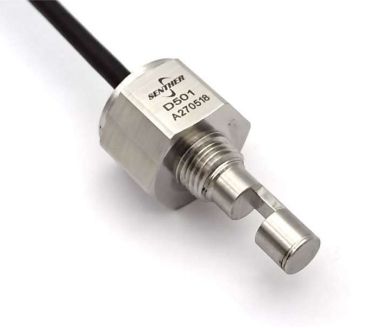
Liquid level monitoring: D501 ultrasonic liquid level sensor (modified for liquid level monitoring), installed on the CDU reservoir; monitors liquid level height, outputs analog switch signals, accuracy better than 2 mm, and immediately outputs an alarm when liquid level deviation occurs
5. Cooling Tower/Heat Exchanger (Core Monitoring: Temperature, Pressure, Liquid Level, Vibration)
Cooling tower fan: same as cooling fan, equipped with 334A vibration sensor + TH742 temperature sensor
Heat exchanger: P3501-10 pressure sensor (inlet/outlet differential pressure) + TH742 temperature sensor (medium inlet/outlet temperature) to monitor heat exchange efficiency and blockage risk
Cooling tower basin: D501 ultrasonic liquid level sensor to monitor liquid level and warn of water shortage/overflow
6. Data Acquisition and Transmission (IN-SDG Multi-Channel Collector)
Core equipment: IN-SDG multi-channel data collector, connected to all sensor signals (RS485/4-20 mA/LoRa); local edge computing, data preprocessing, and anomaly assessment; supports local HMI display and remote cloud platform connection
Transmission mode: wired (Ethernet) + wireless (LoRa/4G) dual backup, transmission distance up to 5 km, ensuring stable data upload to BMS/DCIM systems
(3) Solution Architecture (Three-Layer Architecture, Stable and Reliable)
Perception layer: vibration, temperature, pressure, liquid level, and speed sensors deployed on key equipment to collect full-dimensional status data
Transmission layer: IN-SDG collectors + wireless/wired networks for real-time data transmission, edge computing, and anomaly warning
Application layer: connection to BMS/DCIM/O&M cloud platforms for data visualization, trend analysis, fault warning, remote O&M, and report generation
V. Solution Summary
Based on industrial-grade sensors independently developed by SENSOR Technology, this solution builds a full-dimensional status monitoring system of "vibration + temperature + pressure + liquid level + speed" for key equipment across the entire data center cooling system chain, precisely matching the harsh environment and high-reliability requirements of cooling systems.
(1) Core Advantages
Full-dimensional precise monitoring: covers all key cooling system equipment and core parameters with no blind spots, providing early warning of more than 95% of potential faults
Industrial-grade high reliability: SENSOR sensors are corrosion-resistant, impact-resistant, and wide-temperature adapted, with IP65 protection, suitable for humid, dusty, and high-vibration environments, with a service life of more than 5 years
Low deployment cost: supports wireless LoRa transmission to reduce wiring costs; high sensor integration (e.g., 314AT integrated temperature-vibration sensor) reduces device count and lowers deployment and maintenance costs
Strong adaptability and easy integration: output signals compatible with mainstream BMS/DCIM systems; IN-SDG collectors support edge computing and can quickly connect to existing O&M platforms without large-scale modification
Strong domestic supply assurance: independently developed by SENSOR Technology, with stable supply, strong customization capability, and fast after-sales response, avoiding the risks of long supply cycles and delayed after-sales service associated with imported products
(2) Solution Value
Safety value: early warning of leakage, overheating, mechanical faults, and other hidden risks, reducing cooling system outage risk by more than 80% and ensuring computing continuity
Economic value: predictive maintenance reduces O&M man-hours by 50% and spare-parts costs by 30%, while energy optimization cuts cooling electricity costs by 15%–25%
Compliance value: monitoring data meets national PUE control and safety audit requirements, supporting green and low-carbon transformation of data centers
Management value: enables "unattended operation, remote O&M, and intelligent warning" for cooling systems, improving O&M efficiency and management intelligence
(3) Applicable Scenarios
This solution is applicable to status monitoring of liquid-cooling/air-cooling systems in new, expanded, or renovated high-density data centers, AI computing centers, and supercomputing centers. The number of sensors and deployment points can be flexibly adjusted according to data center scale (power per rack, number of racks) to meet monitoring needs in different scenarios.
